
Meta Launches Muse: A Solution in Search of a Problem
Happy Tuesday.
One follow-up to yesterday's discussion regarding Apple Glasses. In addition to Visual Intelligence, health would represent a natural use case for a pair of glasses worn throughout the day. Up to now, glasses have offered clearer vision. In the future, it would be possible for glasses to offer more in the way of enhanced vision without heading down the AR / spatial computing path. It's another example of how Apple is well-suited to play in the smart glasses category.
For today's update, we will discuss Meta's new AI agent.
Let’s jump in.
Meta Launches Muse: A Solution in Search of a Problem
In a press release issued on September 8th, here’s Meta:
“Today, Meta is introducing Muse, a secure, private personal AI agent that proactively helps with people’s goals and suggests ideas. Because personal agents need a new kind of secure computer, Muse runs on Muse Secure VM, a dedicated, virtual machine (VM) that houses both the agent and a person’s data. Muse is designed around the way people already communicate, so talking to it works just like messaging another person, in the Muse app or directly in WhatsApp.
It’s simple to use. People just tell Muse what needs to get done, and it takes action, powered by Muse Spark, Meta’s most capable model to date, built for real-world agentic work like this.”
In an obvious sign that Meta should have spent some of its AI talent cash on product marketers, the following is the first Muse feature mentioned on Meta’s website.
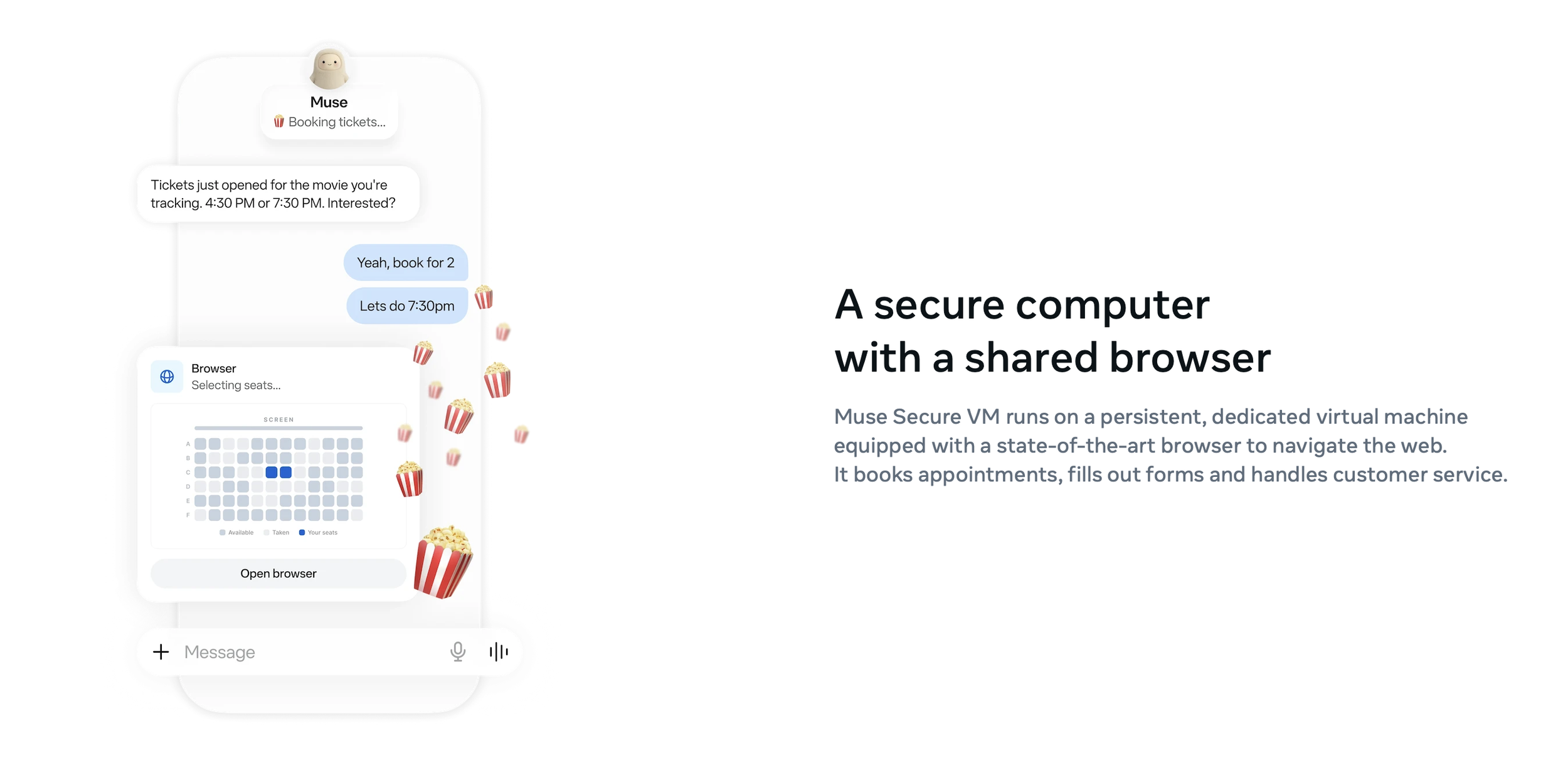
Such product marketing is clearly not aimed at the mass market.
On X, Nat Friedman, head of product at Meta Superintelligence Labs, was forthcoming regarding the Muse development timeline. He published the following post:
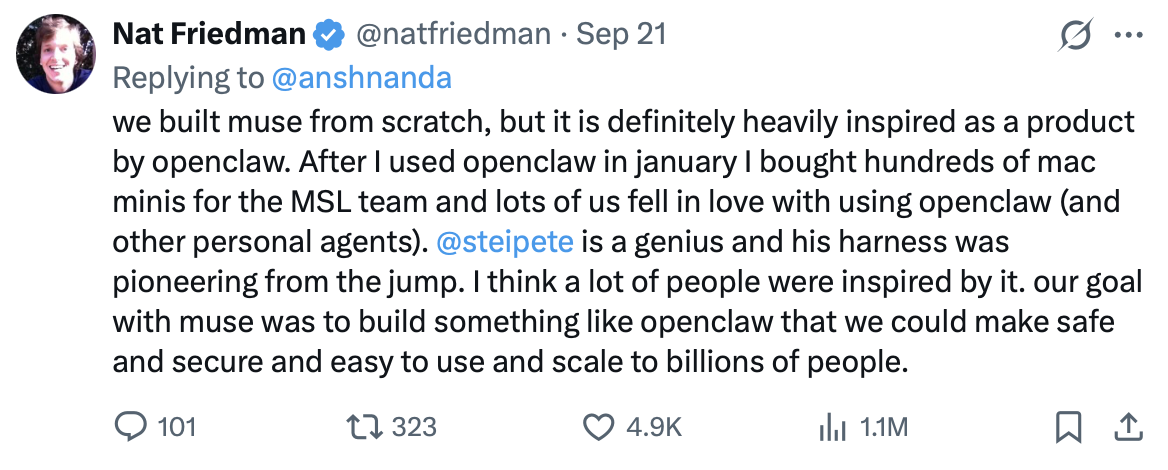
In essence, Muse was developed over the span of eight months and is heavily based on (“inspired by”) OpenClaw. That timeline matches our thinking when going over Meta’s most recent earnings report. That particular update is available here. Based on the number of times “agent” was said on its earnings calls, Meta began to get excited about agents just a few months ago.
Agentic AI strikes me as the latest example of how Silicon Valley can easily lose connection with the rest of the world. For tech proponents, agentic AI has been elevated as the future because
This article is available exclusively to Above Avalon members. Become a member using the payment forms ($20/month or $200/year) below. Members can continue reading this article here.
An audio version of this article is available to members who have the Podcasts add-on (+$10/month or +$100/year) attached to their Above Avalon membership.
For more information on Above Avalon membership, go here.
Member Privileges and Benefits
Exclusive Analysis. Receive Neil’s exclusive daily articles containing analysis and perspective, 100% related to Apple. Neil is widely considered to have the best understanding of Apple’s business and financial strategy with his research and perspective consumed both within and outside of Apple.
Priority Email Access. Receive timely responses to all email questions and inquiries to Neil.
Archive Access. Read ~2,000 articles previously sent to members. The archive can be viewed here.
Forum Access (Discord). Join other Above Avalon members in a forum containing in-depth discussion and Apple debate. The forum can be accessed here. While the form is available to everyone, members have exclusive access to certain channels in addition to receiving special distinction. Neil personally moderate and oversee the forum.
Above Avalon Support. Play an active role in supporting Above Avalon as an independent source of Apple analysis. Above Avalon is fully sustained by its members.