Here's My Platform. Vote for Me.

The first half of 2013 felt weird.  Even though plenty of phones and tablets were sold, as well as several laptops, the excitement level seemed less inflated compared to last year.  Consumers are content with their gadgets and remain busy uploading personal information to a dozen or so social and messaging networks.  Nevertheless, there were some stories in the first half of 2013 primed for riveting Twitter debates. To sum up my stance on these issues, I came up with an easy to remember platform, akin to a politician. I am pro-iWatch, pro-expensive cheap iPhone, anti-Glass, and pro-Schiller.

Pro-iWatch.  Wearable gadgets interest me and I think there is something there.  Back in February, former Apple designer Bruce Tognazzini began what turned into a multi-month parade of chatter related to Apple developing its own smartwatch. I still think Bruce’s piece is the best words on the device and I have a feeling that a few years from now most of his post will have become reality. My conspiracy theory is that Bruce was frustrated with iWatch progress and released some of the work Apple had already done as a bribe to get Apple to finally decide to give the project the green light. In reality, Apple probably has been working on a gadget for the wrist for years (yes, that would make it a Steve project) and there was enough chatter floating around for Bruce to collect into a post. 

I suspect Apple did give the iWatch a green light as seen by numerous talent acquisitions and other signs including industry and management chatter. I think consensus is unsurprisingly naive, if not downright clueless, when it comes to thinking of how an iWatch would look and function. People need to stop picturing a classic watch when rethinking the watch.  I am not a fan of today’s smartwatch as the genre fails to answer many questions that the 21st century has placed on the classic watch; primarily purpose and functionality. The current smartwatch market isn’t seeing massive adoption and the industry lacks a cash-rich leader. Samsung and other giants are quickly rushing to market with their own smartwatch, but I am not optimistic that much will come from these early efforts. Instead, I would look more towards Nike’s Fuelband for signs of reinventing the watch. Add in device independency and fashion conscientiousness, and we start to peel the skin to iWatch’s core. 

Pro-Expensive Cheap iPhone. Apple continued to show healthy iPhone sales last quarter with 20% unit growth. Average selling price (ASP) fell as consumers continued to buy the discounted iPhone 4 and iPhone 4S. It seems fairly certain that Apple will release two new iPhone models next month; a “5S”, or the latest iteration to the iPhone 5, and a less expensive iPhone (think iPhone 5 only with a plastic casing and I suspect lacking the ability to support iOS 7 features exclusive to the iPhone 5S). Price points remain a controversial topic, boiling down to two schools of thought; the cheap iPhone will be priced closer to $200 in order to gain traction in emerging markets where phone subsidies don’t exist versus priced closer to $399-$499 as Apple continues to gradually move downmarket, attempting to create demand in the $399-$499 no-man’s land of new phone pricing.  Even though Apple may be able to manufacture a phone for $200 and still make an “ok” profit, I suspect Apple’s larger strategy is to make sure that all profit layers are captured as the iPhone moves downmarket. If the strategy backfires, Apple can discount the one-year old iPhone 5C for $299 next year and give it another try.

I also think a new $399-$499 iPhone fits well within a possible pro-forma iPhone lineup of iPhone 5S for $650, iPhone 5C in various colors for $450, and iPhone 4S for $350. Such a line-up could be sold across the world, including subsidy land. While a $450 “cheap” iPhone does not address the army of Android phones selling for $99, I wonder if that target is something Apple needs to even shoot for in the near-term. 

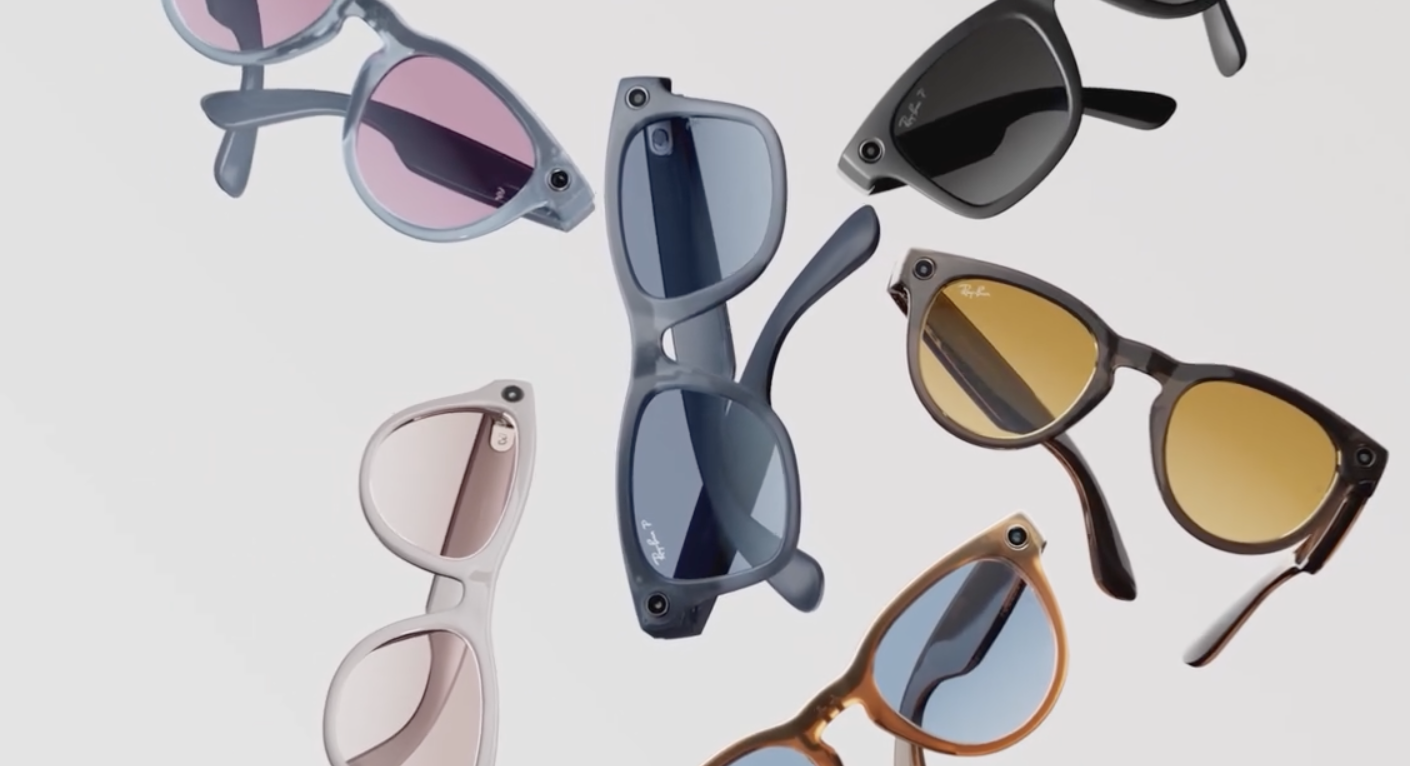
Anti-Glass. I summed up my Google Glass angst in a prior AAPL Orchard post, largely questioning the product on poor industrial design. Having a product on my face, during both usage and non-usage, strikes me as terribly inefficient and ineffective, not to mention obtrusive. Regardless of design, I also suspect the widespread popularity of contact lenses represent a strong case that glasses aren’t exactly a desirable body modifier. Sure, Google Glass represents something new, but new is not the same as good. Many pundits are hedging bets with assertions that Google Glass may find its niche audience. In retrospective, such a statement can be said about any new product as long as the company making that product remains committed to funding the project. Instead, I think Google Glass will largely be ignored once wrist devices flood the market.  

Pro-Schiller. This is the pro-freedom part of my platform, the idea that probably isn’t too controversial yet often goes unnoticed. I consider Apple SVP of Marketing, Phil Schiller, as the embodiment of Apple’s culture. Yes, Jony is Apple’s soul, but Schiller represents the hard work that occurs at Apple HQ, along with the fun, jokes, and general love for the journey taken. Any quick YouTube search would reveal plenty of clips showing wacky Schiller during Apple keynotes. Earlier this year, Schiller made headlines for pumping a bit of Apple PR before Samsung’s keynote unveiling the latest version of its flagship phone. In retrospective, Schiller didn’t need to say anything as Samsung relied on racist and sexist undertones to unveil a phone that didn’t live up to Apple-like expectations.  Looking ahead, Schiller’s input on product pricing placement and marketing will continue to take the spotlight. 

AAPL 2Q13 Preview; Expect Ugly Guidance

Revenue: $41.1 billion (AAPL guidance: $41-43 billion/Consensus: $42.5 billion) 

  • I expect Apple’s revenue to increase 5% year-over-year.

GM: 38.1% (AAPL guidance: 37.5-38.5%/Consensus: 38.5%)

  • Apple continues to feel margin pressure from its current product lineup. Management’s margin guidance is approximately 940 basis points less than the 47.4% margin reported in 2Q12. 

EPS: $9.55 (Consensus: $10.07) 

  • I expect Apple to report a 22% yoy EPS decline. My $9.55 estimate is less than the Street’s $10.07 average.

Product Unit Sales and Commentary

Macs: 3.7 million (8% yoy decline)

  • Mac sales continue to slow as tablets and smartphones satisfy many consumers’ computing needs. I assume declines in both desktops and portables.

iPad: 15.5 million (31% yoy growth)

  • I expect Apple to report solid iPad sales for 2Q13. My iPad estimate assumes approximately 8-10 million iPad mini sales and approximately 1-2 million units added to channel inventory in order to meet management’s target range. 

iPod: 6.1 million (20% yoy decline)

iPhone: 36.5 million (4% yoy growth)

  • With iPhone channel inventory already within management’s target range, I expect Apple to report a significant slowdown in iPhone unit growth (30-90% unit growth over the past four quarters vs. 4% in 2Q13) as the smartphone market matures. Verizon activated 4 million iPhones in 2Q13 and if Verizon represents a similar share of total iPhone sales during the quarter, my 36.5 million unit estimate may be too optimistic on the order of 20%. If iPhone sales are trending closer to 30 million units, I think Apple may resort to stuffing the channel by at least 1-2 million units, resulting in a bear case of approximately 31-32 million iPhones (resulting in EPS around $8.60).


Unless earnings estimates come down drastically in the coming days, I expect Apple to miss consensus EPS on Tuesday.  

In terms of 3Q13 guidance, I am expecting revenues of approximately $30-32 billion and 38-39% margins (which would equate to EPS of approximately $6.20-$6.40, or a 30% decline from 2012). The prospect of no new product launches until CY3Q13 (i.e. after June 30) will pressure iPad and iPhone sales. 

Apple is currently in somewhat of a financial funk as the company battles Wall Street’s expectations game. The high-end smartphone market is becoming saturated, while the booming success of the tablet market is resulting in difficult yoy unit sale numbers. Heading into 1Q13 earnings, I thought the market was already expecting bad news, including weak guidance. I was wrong.  Heading into 2Q13 earnings, consensus is for an EPS decline, but I am not convinced the Street is being realistic with 3Q13  and 4Q13 expectations as consensus numbers still look aggressive.

Quick Note on Capital Management

Some observers are predicting Apple management may try to shift attention away from weak guidance on Tuesday by announcing its latest thoughts on capital management.  While anything is possible, I’m not convinced of that tactic’s effectiveness. Instead, Apple may be better suited to let the dust settle from the current earnings cycle before acting on its updated capital plan.  At the current trajectory, Apple may be in a position to announce a multi-year share buyback authorization representing up to 20% of outstanding shares. More importantly, management will probably have to address its $94 billion of offshore cash as Apple has “only” $43 billion of cash currently available for capital management.  A growing number of industry observers think raising debt is part of Apple’s solution to its offshore cash “problem”.  While there may be financial merit in raising debt in the current environment, such an action would mark a significant new chapter in Apple’s history. 

Conceptual Concerns with Google Glass

Google continues to expand its public R&D effort for Project Glass, recently announcing a call for developers to become part of the early program.  While many tech adopters are becoming downright giddy towards Google Glass, I have a number of reservations about the product, but more importantly the larger implications of how technology evolution will impact society. 

In a Google+ post advertising the Glass developer program, Google wrote, "[w]e’re developing new technology that is designed to be unobtrusive and liberating, and so far we’ve only scratched the surface of the true potential of Glass.

On its surface, that brief description sounds promising. Who wouldn’t want to be liberated by additional technology, all the while still feeling secure and in a weird way; human?  Of course, in its current form, Google Glass doesn’t come close to those accolades as wearing a computer on one’s face doesn’t exactly seem like an advancement for less obtrusive technology. 

As smartphone and tablet proliferation continues, the limitations surrounding tech gadgets is becoming clear. With iPhone in hand, potential is unlimited as the ability to capture the surrounding world, all the while harnessing the web through curated user interfaces (apps), proves to be quite an attractive proposition.  However, once a user is away from their phone (or tablet), the gadget’s usefulness is hard to measure.  The preceding situation demonstrates a major inefficiency in hardware; physical dependency, which time will eventually dissolve as society moves towards a gadgetless world (don’t worry there’s still time to enjoy phones and tablets). 

There are tangible signs that the world is already entering a new phase of mobile computing; wearable technology.  At what may come as a surprise, Nike (via Nike+ FuelBand) and Disney (via MagicBand) seem to be leading the wearable technology army having announced inexpensive (or in Disney’s situation, free) wearable computing products. Of course, one could argue that such focused applications don’t go beyond niche needs or uses, but for that matter, wearable technology, like any disruptive force, will begin with niche uses. Add in Google Glass, and circulating iWatch/iBand rumors, and it becomes clear that the mobile computing industry may be ready to move. 

In its current concept, Google Glass represents the key risk to the next phase of computing; letting technology control society while reducing user optionality. While the ability to take a picture or video of anything, at any time, through a camera near my eye may sound appealing, society can do exactly that now with a phone, which could then be easily put away and ignored. If the resulting argument is “just take off the Google Glasses then”, the added benefit of having such a device is then questioned. Early supporters of the device reiterate that Project Glass is just getting started and the possibilities are endless. While that statement may be true, it lacks the justification for why the initial product should deserve endless praise simply for being introduced. I’m sure other companies could release products that seem cool for a few hours only to discover major conceptual concerns. 

Google isn’t shy in portraying Google Glass as a way to improve one’s quality of life through access to information. Having to wear a computer on one’s face doesn’t ring as some kind of industrial design breakthrough, especially compared to a simple bracelet or watch which could serve many functions by just being casually worn; hidden away under clothing. Technology can then truly melt away into the background. Having an endless amount of information at one’s disposable is not guaranteed to be a benefit and if handled incorrectly, which many companies are doing now, negative consequences are born. 

Where is Project Glass headed? Judging from Google’s videos, the Project Glass team will initially try to find niche uses for Google Glass, including recreational airplane pilots, skydiving schools, taxi drivers, and circus acts.  Of course, each one of those niches raises serious concerns if glasses would even be practical (and safe) in those scenarios, but that’s besides the point. Google has plenty of talent dedicated to Project Glass, which may very well open future doors for the initiative. Criticisms surrounding price and practicality for visually impaired users are somewhat misplaced as those two criteria could probably be solved somewhat easily and quickly. More importantly, Project Glass will give Google data about mobile and wearable computing; data that Nike has already been collecting, and which Disney will soon be. (It’s debatable how valuable such data is to a company. Wall Street loves it, but that’s hardly a ringing endorsement.)

While some are in a rush to applaud Google for publicly airing its R&D and introducing new products for the sake of introducing new products, it’s important to remember that tech companies don’t just sell products, but also values. For wearable computing to become a formidable force, a company’s values and beliefs will prove to be more important than the device itself. Technology has the ability to ruin society through excess noise and information. While some companies hold that fear close to heart, others seem content to usher in that doomsday scenario.

Apple 1Q13 Review; Thoughts on Guidance and AAPL

1Q13 Review

Apple’s 1Q13 results were largely in-line with my expectations.

  • Revenues beat ($54.5 billion vs. my $53.1 billion)
  • Margin beat (38.6% vs. my 37.9%)
  • EPS beat ($13.81 vs. my $12.75)
  • iPhone was an exact match (47.8 million - equal to my estimate)
  • iPad was slightly stronger than expected (22.9 million vs. my 22.4 million)

While I was pleased with the quarter, my estimates were considered somewhat bearish compared to the crowd; so needless to say, there were more disappointed faces than smiles.  Apple reported healthy growth metrics for iPhone and iPad, while iPhone ASP remained strong and iPad ASP declined due to the iPad mini.  

2Q13 Guidance

Management altered the way guidance is presented. While the reasoning was not disclosed, I don’t think its much of a stretch to assume its management’s way of ending analysts’ nasty habit of severely overestimating guidance.  When Apple’s earnings report was initially released, the stock was trading in the $490-$495 range.  Guidance seemed to be of Apple’s conservative nature - in that case, guidance was O.K.  When Apple clarified that it would no longer give EPS guidance, but instead release ranges (including upper limits) for several line-items used to reach EPS, the stock quickly fell to the $460-$465 range as guidance was considered NOT O.K. (it can be debated what management meant by guidance ranges, but I am assuming Apple’s actual results will fall within these ranges). 

I didn’t find Apple’s 2Q13 guidance (with the new ranges) to be overly concerning. Going into the quarter, I knew 2Q13 was going to be tough due to difficult year-over-year comparisons to 2Q12. Judging from the stock’s decline, I guess I was in the minority. 

Did Anything Actually Change? 

Taking a step back from all of the earnings noise, I didn’t learn much new about Apple. Both iPhone and iPad unit growth is slowing, margin remains pressured due to newer products, and EPS growth will be difficult to achieve in 2013.  Minor details such as the iPhone 4 remaining supply-constrained (most likely due to limited resources and parts allocated to iPhone 4 production), iPad mini coming into supply/demand balance by the end of this quarter, and the mix between new and old iPhones remaining constant weren’t exactly market-moving data points.  

AAPL 

It is interesting to read the differing opinions on Apple’s quarter between the Valley’s reaction and that of Wall Street.  In the Valley’s eyes, Apple did great and is firing on all cylinders, but according to Wall Street, AAPL stock is broken as growth is slowing. I think reality is somewhere in the middle of those two extremes.  

AAPL has now been in a 4-month tailspin, including widespread shareholder rotation (meaning many of Apple’s shareholders as of the end of September are selling and being replaced by new shareholders). Such a rotation is often quite volatile, resulting in lower stock prices as the new shareholder base has different priorities and expectations for Apple (often of a lesser nature).  

Back in January 2012, the consensus view on Apple was that EPS from iPhone and iPad would plateau around $60. An additional premium for Apple optionality (i.e. new products) may push EPS to $70. P/E multiple and dividend payout ratios were then calculated accordingly.  Things certainly have changed.  The consensus view is now of Apple EPS topping out around $40. It’s tough for a stock labeled as *the* momentum tech growth story to keep its luster when EPS expectations are cut by 30%. Of course, investors and traders love to panic and overreact, so not only is Apple’s EPS problematic, but Apple’s business model is apparently broken, management is clueless, and the company is the new Microsoft. It is what it is and I don’t see a reason to fight it. 

Investors buying AAPL today (or for that matter - the past year) should not be buying it on iPhone and iPad predictions, but rather Apple’s ability to disrupt itself and introduce new product categories. Not surprisingly, when things are good and AAPL is up, everyone assumes Apple is in great shape. When AAPL is down, management is assumed to be inept; unable to innovate and remain relevant. 

Looking ahead, I think it will be difficult for Apple to report EPS growth in 2Q13 and 3Q13, due to tough year-over-year comparisons related to margins. Modest growth should come back in 4Q13 and moving into 2014.  I am assuming anyone with an earnings model is well aware of these trends, but judging from today’s stock price action, I may be too generous in my assumptions.  Catalysts such as China Mobile selling the iPhone (not in my model) or new products are most likely not being contemplated by Wall Street and one can argue even if catalysts come to fruition, many will simply brush them off as a non-event.  Just as funds had to own AAPL last year to beat certain performance benchmarks, many funds now have to sell AAPL because the stock is down. 

Many are trying to find rational answers with AAPL’s price action, but since the following statements are often true, I’m not sure how many answers are actually out there:

A stock often goes up because it has been going up. 

A stock often goes down because it has been going down. 

A stock’s valuation matters only when valuations start to matter. 

Fundamentals are important only when fundamentals become important. 

AAPL 1Q13 Preview; Near-Term Volatility Continuing

Revenue: $53.1 billion (AAPL guidance: $52.0 billion/Consensus: $54.5 billion) 

  • I expect Apple’s revenue to increase 23% year-over-year after adjusting for the 14 weeks in 1Q12.

GM: 37.9% (AAPL guidance: 36.0%/Consensus: 38.4%)

  • Apple’s margin is expected to decline sequentially from 4Q12 primarily due to the wide range of updated products. Margin remains a key near-term unknown for AAPL. Management’s 36% margin guidance is 870 basis points less than the 44.7% margin reported in 1Q12, making EPS growth difficult to achieve. I still include expanding margins throughout 2013.  Further weakness, or a shallower rebound, may result in an additional EPS growth headwind.

EPS: $12.75 (AAPL guidance: $11.75/Consensus: $13.33) 

  • I expect Apple to report a 1% yoy EPS decline, when adjusting for 1Q12. While my $12.75 estimate is less than the Street’s $13.33 average, I attribute much of the variance to my lower gross margin expectation.

Product Unit Sales and Commentary

Macs: 5.2 million (flat yoy growth)

  • Mac growth continues to slow as tablets and smartphones satisfy many consumers’ computing needs. I expect 10% growth in portables driven by holiday shopping to be mostly offset by nearly a 30% decline in desktop sales due to the new iMac release schedule.

iPad: 22.4 million (56% yoy growth - when adjusted for 1Q12)

  • I expect Apple to report record iPad sales for 1Q13. My iPad estimate assumes approximately 8-10 million iPad minis and 12-13 million iPad 2 and fourth generation units. The iPad mini went on sale November 2 with an aggressive rollout, despite significant pent-up demand and limited supply. Apple was able to sell three million iPads in the three days following the iPad mini and fourth generation iPad launch. My estimate assumes approximately 25-35% cannibalization of the larger iPad models (1 out of 3 consumers willing to buy a larger iPad purchased an iPad mini instead). Going forward, I expect iPad mini sales to approach, if not exceed, those of the larger iPad models. 

iPod: 12.0 million (16% yoy decline)

iPhone: 47.8 million (39% yoy growth)

  • Apple made significant progress in reaching supply/demand balance for iPhone 5 in the U.S. and other launch countries. My quarterly estimate is largely based on AT&T’s recent comments on October and November smartphone sales (and additional extrapolation). Historical averages for AT&T’s share of global iPhones (and assuming a slighter higher mix of international sales) would imply 40-50 million iPhone sales, which I would consider the high probability estimate range.  I then assume channel fill of at least 1 million units, which positions my estimate in the narrower 46-48 million estimate range. 

Apple has missed Wall Street consensus EPS for the past two quarters, and unless estimates come down in the following weeks, a third miss isn’t out of the question. While it is hard to point to any one factor as driving a fundamental change in Apple’s operating performance, Apple’s prior two quarters have contained a few concerning metrics, including contracting margins and declining iPad and iPhone growth.  Did the weak global economy finally catch up to Apple? Were product release cycles continuing to wreck havoc with consumer demand? 

The bear argument would label Apple’s two-year stretch from 2010-2011 as an outlier, when two new products (iPhone and iPad) produced a perfect storm for EPS explosion.  Going forward, bears would argue margins will decline further, effectively limiting EPS growth. Future products would then lack the size to move the EPS needle. 

The bull argument would focus on iPhone and iPad as product leaders in its respective industries, while a temporary margin drop is indicative of product updates and not a fundamental change in the operating landscape. Apple’s future product plans would also occupy a spot in the conversation. 

Will 1Q13 represent an AAPL inflection point? I don’t think one quarter is capable of shedding enough light to figure out where Apple stands in its long, storied history. With iPhone now entering its 6th year (iPod recently celebrated its 11th birthday), the days of 100% revenue growth may be over for the product line, but should that statement even be considered controversial? There is also evidence suggesting Apple may be looking to smooth out demand cycles by updating products more frequently, a move that may bring long-term benefits, but at short-term costs.    

While much of the recent AAPL discussion has been focused on slowing growth and falling margins, it is easy to overlook fundamentals that would be considered very strong for any Apple competitor:

  • A smartphone pulling in $80 billion of revenue annually and growing at least 30%.
  • A tablet pulling in $30 billion of revenue annually and growing at least 45%.

A few AAPL loyalists have recently declared another “bad” Apple quarter (where bad is judged merely by EPS) will signal a new Apple, an Apple not deserving of their attention and instead lumped in with the rest of the tech crowd.  I disagree. One quarter, especially in the midst of an obvious change in business performance (product updates and management reshuffling), is not enough to conclude the long-term Apple story has changed. If an investor wanted to run away from Apple for near-term volatility, that decision could have been made a few months ago. Continued margin volatility may produce a scenario where EPS growth can accelerate throughout the year and 2014, even with slowing product sales growth. 

AAPL’s next 3-5 years will depend on management’s ability to introduce new product categories into an ecosystem that values a set of beliefs, including two that I tried to put into words following my first days with an iPad:

That technology is too powerful of a force to enjoy without acquired perception and natural intelligence.

That product design has the power to momentarily satisfy the never-ending search for order and reason.