
Samsung’s Crisis of Design 2.0
Samsung unveiled its second attempt at wearables, along with its latest flagship phone, earlier this week at MWC. I was not impressed and I am growing more confident that Samsung not only has another “crisis of design”, but will also soon face major headaches from competing Android OEMs. I think we are on the verge of a new phase in mobile phone hardware: Samsung competitors will finally be able to find a footing and begin to attack the giant. Meanwhile, I suspect Apple has already placed Samsung in the same drawer as Microsoft; irrelevant. Tim Cook and company is marching to a completely different beat.
1) The Galaxy Fit looks awful. A curved AMOLED touch screen with a huge piece of plastic on its underside attached to a Modern Glam (plastic) watch strap. I’m having a hard time seeing what is so “beautiful” or “pretty” about Samsung’s new fitness device, to quote a few easily amused tech bloggers. The company’s business model is not dependent on good design and few would suggest otherwise, but I struggle to understand how people can look at the Galaxy Fit and be even mildly impressed by such a horrendous product. One tech blog went so far as to say the Galaxy Fit is a “smartly designed fitness band”. It’s a piece of curved glass set on top of a bunch of plastic with an extremely awkward user experience and interface. Smartly designed?
2) Samsung Galaxy S5. Samsung’s flagship phone now comes in gold and has a fingerprint scanner. While the joke would typically stop there and many would say “copying a good artist is a pretty good strategy”, Samsung didn’t even copy well. The gold color is the wrong shade of gold (Modern Glam gold?) and the fingerprint scanner doesn’t work. I really don’t think I need to say much more about Samsung’s new flagship phone. I suspect Samsung will unveil the real Galaxy S5 this May? Interestingly, Apple was very quiet this week versus last year’s PR push leading up to the Galaxy S4 launch. I wonder why…
3) Samsung is a fish out of water without new Apple inspiration. Samsung is struggling. The easy smart phone growth achieved by simply shipping an alternative to iPhone (bigger screen) is drying up and with no clear path to additional revenue or earnings growth, the company amusingly jumped into wearables. The Galaxy Gear was downright disgusting, while the Galaxy Fit isn’t far behind. Samsung likes to throw around the “we give consumers what they want” meme and I am left wondering who was asking for something like the Galaxy Gear or Galaxy Fit? Samsung is throwing a lot of poop against the wall and desperately hoping something sticks. While some may label such a business strategy as acceptable, I have my doubts that consumers are going to stand by a company that is willing to ship products that merely represent different batches of wall poop.
4) Samsung’s credibility is taking a hit. Last year I noticed a few of my acquaintances made the switch from iPhone to Samsung. The usual reason given for such a move involved wanting a change or simply being bored by iPhone. Interestingly, on follow-up discussions in recent weeks, these switchers are now regretting their move away from iPhone due to Samsung’s plastic and subpar build quality. More than a few people on Twitter tell me the same thing about friends or family being disappointed with their Samsung phones. The amount of negative feedback caught me by surprise. Interestingly, only a few hours after introducing the Galaxy S5, Samsung rumor blogs were talking about a new Samsung phone coming out in May that actually wasn’t made of cheap plastic. Have we reached a point where even Samsung realizes the “not an iPhone” plastic gold Urban Glam option probably isn’t going to do much in terms of winning converts from competing platforms? Consumers are starting to notice what Samsung is actually shipping and the grumblings are getting louder.
5) Samsung competitors are foaming at the mouth. The long-standing joke is that the best Android phones available in the market (never a phone made by Samsung) don’t sell well because no one cares about anything other than Apple and Samsung. I think that may change. After this week, I am becoming confident that consumers are going to stop being passive and begin seeking out alternatives to Samsung in the form of HTC, Sony, Nokia, Lenovo, or countless of other Asian OEMs, all of which are making significant progress in shipping attractive phones at attractive prices (I would include Nexus, but Tony needs to help Google rework distribution). In terms of hardware specs, most of these phones are already at parity and with several Samsung competitors now focusing on hardware design; consumers will simply have fewer reasons to instantly turn to Samsung. Whereas in the past, Samsung might have been the default choice for Android, I suspect that lead will start to slip. In addition, Samsung recently announced that they will reduce their advertising and marketing budget as mobile phone profits decline (not exactly the best timing for such a move). While smaller mobile hardware companies individually lack the ability to compete against Samsung, and just the thought of going up against Samsung can scare many executives into a cold chill, I think each competitor can take a bite out of the giant which can collectively create serious damage. To succeed against Samsung: 1) Focus on branding 2) Save or raise as much capital as you can and throw it into marketing 3) Narrow your distribution focus 4) Figure out why someone should buy your phone. The challenge is significant and Samsung will not stand still, but 2014 is the year. Wait any longer and limited resources may not allow another fight in the future.
Bonus - iWatch Implications from Galaxy Fit. The iWatch will not look like the Galaxy Fit and the iWatch will certainly not operate like the Galaxy Fit. The best way to think about this would be envisioning a small table in Jony’s design lab with various iWatch prototypes. The Galaxy Fit version (simple rectangular curved piece of glass positioned on a plastic watch strap) would be instantly cast off as a no, if it even would be positioned as a possible prototype in the first place. I highly doubt the iWatch will include a strap/buckle or a thick piece of bulging glass. The device won’t depend on an awkward user experience where you have to rotate your head and arm just to look at the device. In summary: Look at the Galaxy Fit and you now know what the iWatch won’t be.
My Letter To Apple SVP of Retail Angela Ahrendts
Angela,
I planned on buying a new iMac on Black Friday. In order to make the process smoother, I ordered online at 6am and chose personal pickup. Approximately one hour after I placed my order I received an email saying that my order was ready. Everything was going well since I would be able to coordinate my Apple store visit with other Black Friday observations at the mall, however my experience with the Apple retail store was very disappointing.
My first interaction with the Apple store was a greeter assigned to the entrance. After saying that I was picking up an iMac that I ordered online, he told me to go see “the guy with the grey hat”, pointing in the general direction of the rear of the store. Relative to other Apple stores this particular location is small and I would venture a guess that it is one of the smallest out there, a carry-over from the early years of Apple retail. After a few minutes it became clear that the “guy with the grey hat” wouldn’t be available any time soon, so I was off to find someone else.
Even though there were plenty of red shirts visible in the store, everyone seemed focused on some task. After finding another worker that actually was not with another customer, I was told to go see another person for personal pickup, who unsurprisingly was with another customer. A few more minutes go by and I finally get my iMac. Overall I didn’t find the experience too magical and in fact, compared to other stores during Black Friday including Macy’s, I would classify Apple’s customer service as inferior.
1) I am not a fan of having to talk with a greeter at the Apple store entrance only to be shuffled to someone who clearly is not free to assist me and repeat why I am in the store. The whole process seems highly inefficient. Instead, getting my information and then relaying that to another employee who can come forward to help me seems more enjoyable. This process may actually exist in other Apple stores and I almost remember something like this occurring to me in the past, but it has been a few years.
2) Apple retail employees have different tasks even though you would never know it because everyone wears the same shirt color. Some workers do not deal with money, others only go around answering questions. This scenario becomes tricky when trying to buy products or pick up previous orders. Compare this to Macy’s where mostly anyone you find walking around can hop over to the nearby register and take care of your order.
3) The floor layout is just unnecessarily chaotic as people are standing around for various tasks such as purchasing product or getting tech support. Generally the front of the store is geared towards selling product with the back dedicated for the Genius Bar, but the middle zone is a very awkward area with people randomly standing around.
In previous years, I recall Apple have a more traditional check-out process for gift cards and other smaller items such as iPods, but such a layout did not exist this time around. Maybe I’m being a bit unfair and I just timed it wrong?
Apple retail just isn’t working anymore and you clearly have numerous objectives to accomplish in 2014.
Good Luck, Neil
P.S. I’m enjoying the iMac
Current Tech Musings and 2014 Predictions
Let’s take a step back and see how things look around the world.
Apple is Fine.
Similar to 2012, Tim Cook back-loaded Apple’s 2013. Apple went so far as to release the retina iPad mini pretty much as late as it could and still guarantee that supply would be adequate before the key holiday shopping season. From all indications, the new hardware is selling well - as one would expect - although many Apple bloggers whiffed when judging 5c popularity. While the sales gap between the 5s and 5c may shrink going forward, I would be quite surprised if the 5c becomes “the real iPhone” as many predicted. The sheer uproar over 5c pricing appears to have quieted down as well. Apple’s redesigned iOS 7 doesn’t seem to have created any new “–gate” controversies, with the only complaints coming from design snobs (I say that with genuine respect). Apple accomplished a lot in 2013, and 2014 looks to be just as jam-packed with what I would expect to be iPhone bifurcation (two distinct iPhone form factors with simultaneous development – a really big deal). An iPad pro (think larger iPad Air with possible dedicated accessories for professionals) would also seem to fit very well in Apple’s 2014 resource timeline.
Tech Industry Hardware Becoming a Snooze.
Take a look around and there really isn’t much in the way of exciting and flashy hardware innovations geared for the masses. Yes, the 5s is forward-thinking, and has the internal composition that will rival next year’s iPhone 6, but it’s hardly something to get people talking at the holiday party. The iPhone 5s fingerprint scanner is nice (continues to work well for me), but I’m not finding it nearly as much of a salesperson as Siri (those initial demos were unbeatable). On the tablet front, it has become an even bigger bore. I use an iPad 2 and have absolutely no desire to upgrade to a newer iPad anytime soon. Outside of Apple, Google is busy publicly beta testing hardware products with the ultimate intent of controlling our data and attention. Amazon is busy spending money left and right in an attempt to sell Amazon Prime subscriptions, and Samsung is twiddling its thumbs waiting for Apple to release new products.
Smartwatches Selling Like Cold Cakes.
The smartwatch appears to have finally hit mainstream in 2013 as Best Buy is now carving out more square footage to the concept. Sales are, and will probably remain, “okay” for early adopters where massive sales are certainly not on the radar, but mass adoption remains out of reach. The idea of a smartwatch makes perfect sense as the phone form factor contains numerous inefficiencies, but the smartwatch industry lacks the needed design and fashion acumen to really get things moving. The technology does appear to be available though. Interestingly, one company has been beefing up their design and fashion human capital resume.
Mobile Messaging App Fever. Yawn.
I’ll be honest, I get bored with the never-ending updates on how many users certain mobile messaging apps have. In the U.S., this fascination with mobile messaging apps remains subdued as Facebook, Twitter, iMessage, (and I suppose you can include Snapchat), pretty much represent the bulk of how people communicate with each other – oh and the phone feature on the iPhone as well. Maybe I’m just naïve (and only friends with Apple users), but I really have no desire to follow which mobile messaging app is selling “stickers” or making a play for the Indonesian mobile app market. I never have used Whatsapp and don’t know anyone who has either. The mobile space is fast moving and people love stories of how start-ups will displace incumbents, but from my vantage point in the U.S. – Facebook and Twitter will remain important communication channels, while iMessage continues to be the sleeper hit. I still think mobile carriers are the big winner as my monthly bills will continue to rise regardless of which start-up does well. Of course critics will say the U.S. doesn’t matter, or is behind the times (and that I am clueless), to which I respond as long as the Valley remains the focal point of technology and entrepreneurship in the world, the U.S. matters.
Changing of the Tech Review Guard.
Yesterday, The Wall Street Journal announced Walt Mossberg’s replacements – relatively new names that probably will get paid a fraction of Mossberg’s current salary. I actually don’t think the WSJ will miss a beat with such a strategy, which may say more about Mossberg’s inflated salary than anything else. Nevertheless, WSJ tech reviews still matter and companies will continue to treat them accordingly. The overall tech product review industry continues to morph and traditional sources for the “yea or nay” for a new product are now shifting to bloggers turned journalists where personal trust outshines all else. As seen with Apple’s latest products, tech specs don’t matter as much these days and this trend will only intensify as fashion bleeds into personal technology.
Other Random Musings.
- It is now easier than ever to grab a few of your journalist friends and start a new company focused on delivering news. Oh, and charge people a lot of money to read what you have to say. I imagine this trend will only intensify as it is becoming clear that 1-5 person shops are finding a particular niche in online journalism. Some personal bloggers are pulling in more than $500,000 a year, which traditional media companies will have a hard time matching (or even justifying), while start-ups with minimal expenses require only a modest subscription base to break-even. Of course, aggregators will continue to do well in this world as well where expense growth via headcount is one differentiator versus the small shops. Slideshows put food on the table. One has to start worrying about information overload though, right? Hopefully? Yeah, I know, wishful thinking.
- A wildcard for 2014 includes Apple’s new retail chief, Angela Ahrendts, which some have already labeled as Apple’s next CEO. My response would be let’s wait to see how she fits within the Apple culture, then we can start talking. Regardless, Apple retail needs some urgent help, so Angela will be busy.
- The tech IPO window is wide open and many signs point to 2014 being another good year. Housing continues to stabilize and contrary to the perma-bears, I think the housing industry will be fine from here on out. The theme of rising interest rates (due to a stronger economy) makes sense to me as well. While I won’t comment on which companies will see an IPO in the coming quarters, I would focus on the quality of these IPOs as one would assume quality will decline as we move past the economic recovery years of 2010-2013.
- Angry Birds (and paid iOS app?) fever is over. It was fun while it lasted. I would be interested to see if Rovio can find another “Angry Birds”, although I remain skeptical. In addition, the overall paid app boom appears to be dead (was there ever a boom?). While there will still be winners going forward, companies solely focused on selling apps for money face dwindling prospects of success. App development, as part of a bigger strategy, seems to have a much brighter future.
Predictions for 2014.
- Pundits will say Apple made numerous mistakes, either in terms of product pricing, marketing, or strategy. The new iPhone will also be classified as marking the end of Apple’s popularity.
- VCs will continue to pass off personal marketing blogs as independent sources of knowledge and wisdom.
- Pundits will say Facebook is dead.
- Mobile messaging app fever will continue.
- Humans will continue to be inundated with useless information and inconsequential data points.
AAPL 4Q13 Preview; Expect a Beat
Revenue: $37.6 billion (AAPL guidance: high end of $34-37 billion range/Consensus: $36.8 billion)
- I expect Apple’s revenue to increase 4% year-over-year.
- I expect Apple’s margin to increase sequentially to 37.1% from 36.9% last quarter, reflecting a modest boost from the newest iPhones. Management’s margin guidance is approximately 300-400 basis points less than the 40.0% margin reported in 4Q12.
- I expect Apple to report a 5% yoy EPS decline. I am including a 908 million share count (implying around $8 billion of buyback).
Product Unit Sales and Commentary
Macs: 4.4 million (10% yoy decline)- Mac sales continue to slow as tablets and smart phones satisfy many consumers’ computing needs. I assume 10% declines in both desktops and portables.
- I expect Apple to report weak iPad sales ahead of the iPad refresh in October. With modest channel inventory fill, I expect iPad sell-through to stay somewhat consistent with 3Q13, reflecting some benefit from back to school shopping.
iPod: 3.7 million (30% yoy decline)
iPhone: 34.4 million (28% yoy growth)- I ordered my gold iPhone 5s online seven minutes after launch and my phone didn’t ship until September 30, two days after quarter end, so it’s clear that a large number of iPhone 5s launch sales will be pushed into 1Q14. Partially offsetting delayed 5s launch sales was solid 5c supply. My 34.4 million iPhone number assumes 13-14 million units of iPhone 5s and 5c and 20 million units of legacy iPhone (5, 4S and 4) selling at roughly the same weekly sales pace seen in 3Q13 (2.6 million).
Initial Thoughts on iPhone 5s
I’ve been using my new gold iPhone 5s for a few days. Here are my initial impressions:
Size: I like the 5s, not sure I would enjoy a bigger phone. Upgrading from the 4S, it took a little bit of time to get use to the slightly farther thumb reaches required to touch the upper left corner of the 5s. Even though the extra screen real estate is a positive, I have doubts that I would want a bigger screen than the 5s. I often find myself in one-handed use situations and I simply would not be able to use a bigger screen. If Apple is to go bigger with iPhone 6 (seems like its more than a 50/50 probability at this point), I suspect Apple will also maintain the current iPhone size, which would be noteworthy in that Apple would be maintaining and updating two different iPhone sizes. It may just finally be that time though as the smartphone market continues to mature.
Slo-Mo: This year’s Siri. The new slow motion camera mode will be the feature everyone is demoing at the Thanksgiving table or holiday party, just like how Siri was so much fun to show friends and family. I have taken at least 15-20 slo-mo videos so far and still can’t get enough. Of course, this fascination may very well die off in a few weeks, but by then it wouldn’t matter much since everyone I know would have seen the feature.
Color: White is the new Black. Up to now, it felt that the black iPhone was the unofficial default iPhone, the color you get to be like everyone else, while the white iPhone was the designated color to stand out from the crowd. I think the 5s changes that dynamic and white (sliver and gold) will become the default color, while the space grey is the color to stand out from the crowd (even though it doesn’t stand out as much as white did in previous years). Of course, I am not taking into account case usage, which may make this a moot point, but nevertheless I think there will be quite a few gold and silver iPhones in the wild in coming months and momentum will only build.
Touch ID: Awkward at first, but still cool. It took me two days to get use to Touch ID, or should I say, break my habit of simply pressing the home button and then typing my passcode. My issue dealt with pressing the home button and not leaving my finger on the button long enough for the fingerprint scanner to do its job. I also tried to show the feature to another 4S user and they had to be walked through the installation steps and even then they had trouble, so clearly Touch ID is not the easiest feature to demo to normal non-tech users, but nevertheless it’s pretty cool.
Weight: Wow. After a few days of using iPhone 5s, my iPhone 4S feels like a brick. It’s remarkable and incredible. Not sure much more has to be said.
Battery: An improvement. I’m able to get through a day of pretty constant 5s use (a few tasks per hour, all day) without a trip to find the power cord. I wouldn’t be able to say the same with my iPhone 4S.
Speed: Hard to see a difference with LTE; iOS 7 feels faster with 5s. LTE was one of those features Android fans mocked the 4S for not supporting. I don’t see the big deal. I often find myself on Wi-Fi with fast enough speeds to make any differences with LTE negligible. I do see a difference in terms of iOS 7, especially animations. Even though my 4S was feeling a tad sluggish with iOS 7, I don’t find myself complaining with 5s.
Free iPhoto & iMovie: Useful and fun. A few seconds after launch I was asked if I wanted to download a slew of free Apple apps, including iWork, iPhoto, and iMovie. While many users may just play around with these apps here and there, I think they are plenty capable and will put a dent in third-party paid photo and video editing apps.
Big Picture: Refinement is king with 5s. When I upgraded to 4S from 3GS, the speed blew me away. Not only was the phone’s improved performance noticeable, but Siri was a pretty darn cool feature. The 5s doesn’t have that same wow factor surrounding speed improvement, but instead the subtle refinements in terms of battery, camera, apps, and color, add up. I would have a difficult time moving back to the 4S, which is the easiest way to know that the 5s is a winner and another step forward in Apple’s iPhone refinement journey.
Twitter's Problem; Not Connecting with Mainstream Users
Twitter is going public. If you are an employee, investor, or simply a tech IPO lover, this is a very exciting time. While there is much to like about Twitter, I’m noticing a trend that is somewhat concerning; Twitter isn’t connecting with mainstream users.
Twitter had 215 million monthly active users (MAUs) as of June 30, 2013, a 44% increase from 2012. In today’s mobile world, an ecosystem with 215 million users is a very respectable number, but a 44% user growth rate isn’t superb. In the U.S., Twitter saw only 32% year-over-year user growth to 49 million MAUs, adding just 1 million users in the second quarter. For a well established ecosystem, these numbers aren’t exactly thrilling.
Earlier this week, one of my Facebook “friends” posted a question on her timeline, “What’s the deal with Twitter? Should I do it?” Within one hour, five people answered - all with a “no”. Surveying my non-tech social circle, Twitter usage is abysmal. A quick check with my high school teacher acquaintance led to an expected answer, no one at school talks about or uses Twitter. At a recent state fair that saw upwards of 160,000 visitors on a Saturday, tweets mentioning the event numbered in the dozens. The list of anecdotal data points showing Twitter’s lack of connection with mainstream users goes on and on.
While Twitter is proving valuable to a select group of users, the platform is not exactly hitting mainstream usage similar to how Facebook (1.1 billion users) conquered the world, or even messaging apps such as WhatsApp (300 million users) are trending.
What is going on? I suspect Twitter is not appealing to the masses in a world where Facebook made it socially acceptable to share and more intimate social apps, like Snapchat, are using their “coolness” and “ease” to flourish. Many are confused with the concept of Twitter since the company really isn’t a classic social network, but instead an information aggregator. When a user joins, they are bombarded with suggested follows. If a user bypasses the suggested follows page, it is somewhat unclear what is the next step, especially if their current social circle is not well represented on Twitter. It takes time to find interesting channels (people, companies, concepts) worth following. Rather than being a social network where people use Twitter to update friends with actions and ideas (that’s more for Instagram and Snapchat), I think of Twitter more like an improved form of television, where a user creates a list of channels to watch or follow. Corporations, brands, and news organizations desperately want a Twitter presence to reach potential customers, further highlighting the television metaphor. The big question is if such a concept can appeal to mainstream users.
Heading into Twitter’s IPO, I suspect user growth will remain a key topic and concern among investors. While management will be judged on revenue and profit growth, including user utilization rates, I think the company faces an uphill battle with user growth as competing services continue to fight for mindshare in the maturing mobile computing era. I see the value in Twitter, but I’m concerned that mainstream users will never give the service a chance.
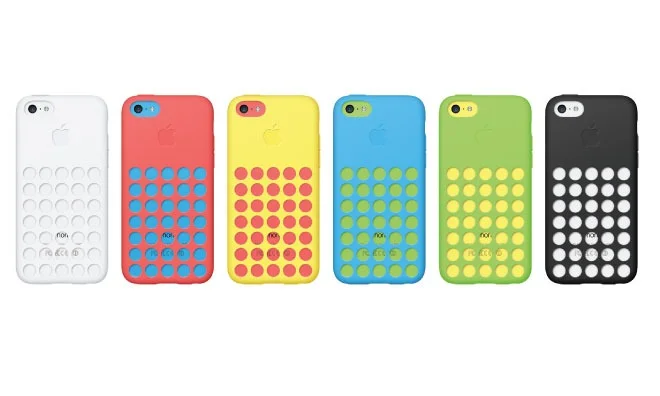
Apple’s Marketing Missile - iPhone 5c
I like getting reactions from normal people about technology. On Tuesday evening, after the Apple keynote, the first reaction I received was “I like these color iPhones. They come with the cases right?” After a bit of prodding, I discovered iPhone 5c cases were actually receiving more positive reactions than I initially assumed.
I suspect iPhone 5c colors and cases are serving as a marketing missile aimed at the few price layers situated below the iPhone 5s. While it may be easy to assume that colorful iPhones appeal to specific demographics, I think it is appropriate to take a step back to get a clearer picture.
In a few months it will be much easier to see iPhones in the wild thanks to these hard to miss 5c colors. Throw in wacky 5c cases and the phones will be impossible to ignore. Up to now, many iPhones were covered by generic cases that made them largely indistinguishable from Android phones. The iPhone 5c, and corresponding cases, may be a very elaborate, yet subtle, marketing campaign aimed at the subconscious. Seeing everyone use a particular phone may go a long way in helping to sway one’s purchase towards that product.
Add in this evening’s announcement of Apple partnering with Burberry for the iPhone 5s and I suspect we may be on the verge of a revamped iPhone marketing strategy focused on positioning iPhone as the premier phone brand, worthy of aspirational goals.
I Like Apple's iPhone Strategy
I felt Apple did a good job today. For the first time Apple will be selling two brand new phones, including one for under $100 in the U.S. A brand new iPhone for under $100. I wouldn’t underestimate the impact of such a feat.
While there were some interesting technologies introduced, including a fingerprint scanner and a motion coprocessor, I have learned to control my long-term predictions on what such technologies may mean for Apple’s product line. Time will tell if such innovations become major cornerstones in future Apple products.
The most controversial aspect of today’s event was iPhone pricing. I see a schism developing among the tech punditry. On one hand, there is the belief that market share is king and Apple must address the bottom of the market because developers will begin to focus on Android’s sheer numbers instead of iOS. On the other side, where I stand, market share is not created equal. It is okay if Apple doesn’t address the lower end of the market since five consumers who don’t buy mobile apps or content is not equal to one who does. Looking at today’s events, I think Apple is doing the right thing gradually moving down market (iPhone 4 and 4S have not been discontinued). This strategy will only expand in coming years. With approximately 400M-500M (and growing) active iOS users with credit cards, I view the iOS ecosystem as now self-sustaining, capable of app innovation as long as the hardware and software back developers up. If I changed sides and instead only looked at market share, I’m sure I would have been championing Symbian, then Blackberry, and now Android. Market share is not everything.
Moving to more minor topics, Apple is still addicted to case money, now selling iPhone 5s and 5c cases. Selling cases is a good and easy business decision and judging from the popularity of iPhone cases, Apple will make a decent amount of profit (and margin) from going down that road. Apple also announced it will give away $40 of software with new iPhone and iPad purchases. While I am not a big user of Apple’s mobile productivity apps, quite a few people are and I suspect there will be many happy iOS users.
There are still plenty of questions remaining about Apple and strategy.
Did Apple’s keynote contain a bit too much of tech jargon? Maybe.
Will mainstream consumers accept iOS 7 without any major complaints? Maybe.
Will Apple’s margin actually benefit from the new iPhone line? Maybe.
Nevertheless, with a new flagship phone that has enough differentiation to stand out from competitors, a more value-oriented option for consumers with slightly different priorities, and the desire to maintain older iPhone models in order to address the mid-tier phone market, I like where Apple is sitting and the outlook for the iPhone business over the next 6-12 months.
iPhone Keynote Expectations
Apple’s 2013 iPhone event is here. At the end of the day, everything comes down to expectations. If reality is unable to meet expectations, disappointment is not far behind. If expectations are kept measured, reality may still be able to deliver a positive surprise. Taking into account weeks of rumor, speculation, discussion, and simply “educated” guessing, here are my expectations:
Subsidy Land (Countries where phones are subsidized by mobile carriers)
$199 – iPhone 5S with a 128GB option, “gold” color option, fingerprint scanner, improved camera, faster processor. (95% confidence)
$99 - iPhone 5C available in various colors. (75% confidence)
$0 - iPhone 4S (51% confidence)
Non-Subsidy Land (Countries where phones are not subsidized by mobile carriers. Pre-paid option in subsidy land. For simplicity, I’m not considering various taxes/international fees.)
$650 – iPhone 5S with a 128GB option, “gold” color option, fingerprint scanner, improved camera, faster processor. (95% confidence)
$499 – iPhone 5C available in various colors. (75% confidence)
$399 - iPhone 4S (51% confidence)
$349 – iPhone 4 (50.1% confidence)
Summary
1) The “cheap” iPhone won’t be cheap. Consensus seems to have settled around the $399-$499 range, therefore I suspect $499 is the floor. For the first time, Apple will be selling a brand new iPhone for under $100 in the U.S.
2) I think the iPhone 4S and 4 will stick around (in somewhat limited capacity). I have received the most push-back on this point, but I still see a large market need being met by the 4S and 4 (having an iPhone at a sub-$400 price point is important).
3) The iPhone 5 will see end-of-life, to be replaced by the very capable iPhone 5C.
4) Notice the subtle differences in subsidy and non-subsidy wholesale pricing. Apple may be willing to sacrifice $50 or so in non-subsidy land for more aggressive iPhone 5C pricing (coinciding with China Mobile launch).
5) I think an iPhone 5S fingerprint scanner could be a pretty big talking point during the keynote (think this year’s Siri). Expect very limited functionality, but a ton on security and privacy.
6) Other topics such as a refreshed Apple TV (not a TV set), updated iPods, and a few more new iOS 7 features are probably more likely than not at this point.
Other Random Musings
As usual with Apple keynotes, the safe bet is to collect all rumors and divide by half to get closer to reality. There will likely be disappointment around iPhone 5C pricing and chatter that the iPhone 5S isn’t different enough from previous models. Let’s not even begin to discuss iOS 7 reactions.
Here's My Platform. Vote for Me.
The first half of 2013 felt weird. Even though plenty of phones and tablets were sold, as well as several laptops, the excitement level seemed less inflated compared to last year. Consumers are content with their gadgets and remain busy uploading personal information to a dozen or so social and messaging networks. Nevertheless, there were some stories in the first half of 2013 primed for riveting Twitter debates. To sum up my stance on these issues, I came up with an easy to remember platform, akin to a politician. I am pro-iWatch, pro-expensive cheap iPhone, anti-Glass, and pro-Schiller.
Pro-iWatch. Wearable gadgets interest me and I think there is something there. Back in February, former Apple designer Bruce Tognazzini began what turned into a multi-month parade of chatter related to Apple developing its own smartwatch. I still think Bruce’s piece is the best words on the device and I have a feeling that a few years from now most of his post will have become reality. My conspiracy theory is that Bruce was frustrated with iWatch progress and released some of the work Apple had already done as a bribe to get Apple to finally decide to give the project the green light. In reality, Apple probably has been working on a gadget for the wrist for years (yes, that would make it a Steve project) and there was enough chatter floating around for Bruce to collect into a post.
I suspect Apple did give the iWatch a green light as seen by numerous talent acquisitions and other signs including industry and management chatter. I think consensus is unsurprisingly naive, if not downright clueless, when it comes to thinking of how an iWatch would look and function. People need to stop picturing a classic watch when rethinking the watch. I am not a fan of today’s smartwatch as the genre fails to answer many questions that the 21st century has placed on the classic watch; primarily purpose and functionality. The current smartwatch market isn’t seeing massive adoption and the industry lacks a cash-rich leader. Samsung and other giants are quickly rushing to market with their own smartwatch, but I am not optimistic that much will come from these early efforts. Instead, I would look more towards Nike’s Fuelband for signs of reinventing the watch. Add in device independency and fashion conscientiousness, and we start to peel the skin to iWatch’s core.
Pro-Expensive Cheap iPhone. Apple continued to show healthy iPhone sales last quarter with 20% unit growth. Average selling price (ASP) fell as consumers continued to buy the discounted iPhone 4 and iPhone 4S. It seems fairly certain that Apple will release two new iPhone models next month; a “5S”, or the latest iteration to the iPhone 5, and a less expensive iPhone (think iPhone 5 only with a plastic casing and I suspect lacking the ability to support iOS 7 features exclusive to the iPhone 5S). Price points remain a controversial topic, boiling down to two schools of thought; the cheap iPhone will be priced closer to $200 in order to gain traction in emerging markets where phone subsidies don’t exist versus priced closer to $399-$499 as Apple continues to gradually move downmarket, attempting to create demand in the $399-$499 no-man’s land of new phone pricing. Even though Apple may be able to manufacture a phone for $200 and still make an “ok” profit, I suspect Apple’s larger strategy is to make sure that all profit layers are captured as the iPhone moves downmarket. If the strategy backfires, Apple can discount the one-year old iPhone 5C for $299 next year and give it another try.
I also think a new $399-$499 iPhone fits well within a possible pro-forma iPhone lineup of iPhone 5S for $650, iPhone 5C in various colors for $450, and iPhone 4S for $350. Such a line-up could be sold across the world, including subsidy land. While a $450 “cheap” iPhone does not address the army of Android phones selling for $99, I wonder if that target is something Apple needs to even shoot for in the near-term.
Anti-Glass. I summed up my Google Glass angst in a prior AAPL Orchard post, largely questioning the product on poor industrial design. Having a product on my face, during both usage and non-usage, strikes me as terribly inefficient and ineffective, not to mention obtrusive. Regardless of design, I also suspect the widespread popularity of contact lenses represent a strong case that glasses aren’t exactly a desirable body modifier. Sure, Google Glass represents something new, but new is not the same as good. Many pundits are hedging bets with assertions that Google Glass may find its niche audience. In retrospective, such a statement can be said about any new product as long as the company making that product remains committed to funding the project. Instead, I think Google Glass will largely be ignored once wrist devices flood the market.
Pro-Schiller. This is the pro-freedom part of my platform, the idea that probably isn’t too controversial yet often goes unnoticed. I consider Apple SVP of Marketing, Phil Schiller, as the embodiment of Apple’s culture. Yes, Jony is Apple’s soul, but Schiller represents the hard work that occurs at Apple HQ, along with the fun, jokes, and general love for the journey taken. Any quick YouTube search would reveal plenty of clips showing wacky Schiller during Apple keynotes. Earlier this year, Schiller made headlines for pumping a bit of Apple PR before Samsung’s keynote unveiling the latest version of its flagship phone. In retrospective, Schiller didn’t need to say anything as Samsung relied on racist and sexist undertones to unveil a phone that didn’t live up to Apple-like expectations. Looking ahead, Schiller’s input on product pricing placement and marketing will continue to take the spotlight.
AAPL 2Q13 Preview; Expect Ugly Guidance
Revenue: $41.1 billion (AAPL guidance: $41-43 billion/Consensus: $42.5 billion)
- I expect Apple’s revenue to increase 5% year-over-year.
GM: 38.1% (AAPL guidance: 37.5-38.5%/Consensus: 38.5%)
- Apple continues to feel margin pressure from its current product lineup. Management’s margin guidance is approximately 940 basis points less than the 47.4% margin reported in 2Q12.
EPS: $9.55 (Consensus: $10.07)
- I expect Apple to report a 22% yoy EPS decline. My $9.55 estimate is less than the Street’s $10.07 average.
Product Unit Sales and Commentary
Macs: 3.7 million (8% yoy decline)
- Mac sales continue to slow as tablets and smartphones satisfy many consumers’ computing needs. I assume declines in both desktops and portables.
iPad: 15.5 million (31% yoy growth)
- I expect Apple to report solid iPad sales for 2Q13. My iPad estimate assumes approximately 8-10 million iPad mini sales and approximately 1-2 million units added to channel inventory in order to meet management’s target range.
iPod: 6.1 million (20% yoy decline)
iPhone: 36.5 million (4% yoy growth)
- With iPhone channel inventory already within management’s target range, I expect Apple to report a significant slowdown in iPhone unit growth (30-90% unit growth over the past four quarters vs. 4% in 2Q13) as the smartphone market matures. Verizon activated 4 million iPhones in 2Q13 and if Verizon represents a similar share of total iPhone sales during the quarter, my 36.5 million unit estimate may be too optimistic on the order of 20%. If iPhone sales are trending closer to 30 million units, I think Apple may resort to stuffing the channel by at least 1-2 million units, resulting in a bear case of approximately 31-32 million iPhones (resulting in EPS around $8.60).
Unless earnings estimates come down drastically in the coming days, I expect Apple to miss consensus EPS on Tuesday.
In terms of 3Q13 guidance, I am expecting revenues of approximately $30-32 billion and 38-39% margins (which would equate to EPS of approximately $6.20-$6.40, or a 30% decline from 2012). The prospect of no new product launches until CY3Q13 (i.e. after June 30) will pressure iPad and iPhone sales.
Apple is currently in somewhat of a financial funk as the company battles Wall Street’s expectations game. The high-end smartphone market is becoming saturated, while the booming success of the tablet market is resulting in difficult yoy unit sale numbers. Heading into 1Q13 earnings, I thought the market was already expecting bad news, including weak guidance. I was wrong. Heading into 2Q13 earnings, consensus is for an EPS decline, but I am not convinced the Street is being realistic with 3Q13 and 4Q13 expectations as consensus numbers still look aggressive.
Quick Note on Capital Management
Some observers are predicting Apple management may try to shift attention away from weak guidance on Tuesday by announcing its latest thoughts on capital management. While anything is possible, I’m not convinced of that tactic’s effectiveness. Instead, Apple may be better suited to let the dust settle from the current earnings cycle before acting on its updated capital plan. At the current trajectory, Apple may be in a position to announce a multi-year share buyback authorization representing up to 20% of outstanding shares. More importantly, management will probably have to address its $94 billion of offshore cash as Apple has “only” $43 billion of cash currently available for capital management. A growing number of industry observers think raising debt is part of Apple’s solution to its offshore cash “problem”. While there may be financial merit in raising debt in the current environment, such an action would mark a significant new chapter in Apple’s history.
Conceptual Concerns with Google Glass
Google continues to expand its public R&D effort for Project Glass, recently announcing a call for developers to become part of the early program. While many tech adopters are becoming downright giddy towards Google Glass, I have a number of reservations about the product, but more importantly the larger implications of how technology evolution will impact society.
In a Google+ post advertising the Glass developer program, Google wrote, "[w]e’re developing new technology that is designed to be unobtrusive and liberating, and so far we’ve only scratched the surface of the true potential of Glass.”
On its surface, that brief description sounds promising. Who wouldn’t want to be liberated by additional technology, all the while still feeling secure and in a weird way; human? Of course, in its current form, Google Glass doesn’t come close to those accolades as wearing a computer on one’s face doesn’t exactly seem like an advancement for less obtrusive technology.
As smartphone and tablet proliferation continues, the limitations surrounding tech gadgets is becoming clear. With iPhone in hand, potential is unlimited as the ability to capture the surrounding world, all the while harnessing the web through curated user interfaces (apps), proves to be quite an attractive proposition. However, once a user is away from their phone (or tablet), the gadget’s usefulness is hard to measure. The preceding situation demonstrates a major inefficiency in hardware; physical dependency, which time will eventually dissolve as society moves towards a gadgetless world (don’t worry there’s still time to enjoy phones and tablets).
There are tangible signs that the world is already entering a new phase of mobile computing; wearable technology. At what may come as a surprise, Nike (via Nike+ FuelBand) and Disney (via MagicBand) seem to be leading the wearable technology army having announced inexpensive (or in Disney’s situation, free) wearable computing products. Of course, one could argue that such focused applications don’t go beyond niche needs or uses, but for that matter, wearable technology, like any disruptive force, will begin with niche uses. Add in Google Glass, and circulating iWatch/iBand rumors, and it becomes clear that the mobile computing industry may be ready to move.
In its current concept, Google Glass represents the key risk to the next phase of computing; letting technology control society while reducing user optionality. While the ability to take a picture or video of anything, at any time, through a camera near my eye may sound appealing, society can do exactly that now with a phone, which could then be easily put away and ignored. If the resulting argument is “just take off the Google Glasses then”, the added benefit of having such a device is then questioned. Early supporters of the device reiterate that Project Glass is just getting started and the possibilities are endless. While that statement may be true, it lacks the justification for why the initial product should deserve endless praise simply for being introduced. I’m sure other companies could release products that seem cool for a few hours only to discover major conceptual concerns.
Google isn’t shy in portraying Google Glass as a way to improve one’s quality of life through access to information. Having to wear a computer on one’s face doesn’t ring as some kind of industrial design breakthrough, especially compared to a simple bracelet or watch which could serve many functions by just being casually worn; hidden away under clothing. Technology can then truly melt away into the background. Having an endless amount of information at one’s disposable is not guaranteed to be a benefit and if handled incorrectly, which many companies are doing now, negative consequences are born.
Where is Project Glass headed? Judging from Google’s videos, the Project Glass team will initially try to find niche uses for Google Glass, including recreational airplane pilots, skydiving schools, taxi drivers, and circus acts. Of course, each one of those niches raises serious concerns if glasses would even be practical (and safe) in those scenarios, but that’s besides the point. Google has plenty of talent dedicated to Project Glass, which may very well open future doors for the initiative. Criticisms surrounding price and practicality for visually impaired users are somewhat misplaced as those two criteria could probably be solved somewhat easily and quickly. More importantly, Project Glass will give Google data about mobile and wearable computing; data that Nike has already been collecting, and which Disney will soon be. (It’s debatable how valuable such data is to a company. Wall Street loves it, but that’s hardly a ringing endorsement.)
While some are in a rush to applaud Google for publicly airing its R&D and introducing new products for the sake of introducing new products, it’s important to remember that tech companies don’t just sell products, but also values. For wearable computing to become a formidable force, a company’s values and beliefs will prove to be more important than the device itself. Technology has the ability to ruin society through excess noise and information. While some companies hold that fear close to heart, others seem content to usher in that doomsday scenario.
Apple 1Q13 Review; Thoughts on Guidance and AAPL
1Q13 Review
Apple’s 1Q13 results were largely in-line with my expectations.
- Revenues beat ($54.5 billion vs. my $53.1 billion)
- Margin beat (38.6% vs. my 37.9%)
- EPS beat ($13.81 vs. my $12.75)
- iPhone was an exact match (47.8 million - equal to my estimate)
- iPad was slightly stronger than expected (22.9 million vs. my 22.4 million)
While I was pleased with the quarter, my estimates were considered somewhat bearish compared to the crowd; so needless to say, there were more disappointed faces than smiles. Apple reported healthy growth metrics for iPhone and iPad, while iPhone ASP remained strong and iPad ASP declined due to the iPad mini.
2Q13 Guidance
Management altered the way guidance is presented. While the reasoning was not disclosed, I don’t think its much of a stretch to assume its management’s way of ending analysts’ nasty habit of severely overestimating guidance. When Apple’s earnings report was initially released, the stock was trading in the $490-$495 range. Guidance seemed to be of Apple’s conservative nature - in that case, guidance was O.K. When Apple clarified that it would no longer give EPS guidance, but instead release ranges (including upper limits) for several line-items used to reach EPS, the stock quickly fell to the $460-$465 range as guidance was considered NOT O.K. (it can be debated what management meant by guidance ranges, but I am assuming Apple’s actual results will fall within these ranges).
I didn’t find Apple’s 2Q13 guidance (with the new ranges) to be overly concerning. Going into the quarter, I knew 2Q13 was going to be tough due to difficult year-over-year comparisons to 2Q12. Judging from the stock’s decline, I guess I was in the minority.
Did Anything Actually Change?
Taking a step back from all of the earnings noise, I didn’t learn much new about Apple. Both iPhone and iPad unit growth is slowing, margin remains pressured due to newer products, and EPS growth will be difficult to achieve in 2013. Minor details such as the iPhone 4 remaining supply-constrained (most likely due to limited resources and parts allocated to iPhone 4 production), iPad mini coming into supply/demand balance by the end of this quarter, and the mix between new and old iPhones remaining constant weren’t exactly market-moving data points.
AAPL
It is interesting to read the differing opinions on Apple’s quarter between the Valley’s reaction and that of Wall Street. In the Valley’s eyes, Apple did great and is firing on all cylinders, but according to Wall Street, AAPL stock is broken as growth is slowing. I think reality is somewhere in the middle of those two extremes.
AAPL has now been in a 4-month tailspin, including widespread shareholder rotation (meaning many of Apple’s shareholders as of the end of September are selling and being replaced by new shareholders). Such a rotation is often quite volatile, resulting in lower stock prices as the new shareholder base has different priorities and expectations for Apple (often of a lesser nature).
Back in January 2012, the consensus view on Apple was that EPS from iPhone and iPad would plateau around $60. An additional premium for Apple optionality (i.e. new products) may push EPS to $70. P/E multiple and dividend payout ratios were then calculated accordingly. Things certainly have changed. The consensus view is now of Apple EPS topping out around $40. It’s tough for a stock labeled as *the* momentum tech growth story to keep its luster when EPS expectations are cut by 30%. Of course, investors and traders love to panic and overreact, so not only is Apple’s EPS problematic, but Apple’s business model is apparently broken, management is clueless, and the company is the new Microsoft. It is what it is and I don’t see a reason to fight it.
Investors buying AAPL today (or for that matter - the past year) should not be buying it on iPhone and iPad predictions, but rather Apple’s ability to disrupt itself and introduce new product categories. Not surprisingly, when things are good and AAPL is up, everyone assumes Apple is in great shape. When AAPL is down, management is assumed to be inept; unable to innovate and remain relevant.
Looking ahead, I think it will be difficult for Apple to report EPS growth in 2Q13 and 3Q13, due to tough year-over-year comparisons related to margins. Modest growth should come back in 4Q13 and moving into 2014. I am assuming anyone with an earnings model is well aware of these trends, but judging from today’s stock price action, I may be too generous in my assumptions. Catalysts such as China Mobile selling the iPhone (not in my model) or new products are most likely not being contemplated by Wall Street and one can argue even if catalysts come to fruition, many will simply brush them off as a non-event. Just as funds had to own AAPL last year to beat certain performance benchmarks, many funds now have to sell AAPL because the stock is down.
Many are trying to find rational answers with AAPL’s price action, but since the following statements are often true, I’m not sure how many answers are actually out there:
A stock often goes up because it has been going up.
A stock often goes down because it has been going down.
A stock’s valuation matters only when valuations start to matter.
Fundamentals are important only when fundamentals become important.
AAPL 1Q13 Preview; Near-Term Volatility Continuing
Revenue: $53.1 billion (AAPL guidance: $52.0 billion/Consensus: $54.5 billion)
- I expect Apple’s revenue to increase 23% year-over-year after adjusting for the 14 weeks in 1Q12.
GM: 37.9% (AAPL guidance: 36.0%/Consensus: 38.4%)
- Apple’s margin is expected to decline sequentially from 4Q12 primarily due to the wide range of updated products. Margin remains a key near-term unknown for AAPL. Management’s 36% margin guidance is 870 basis points less than the 44.7% margin reported in 1Q12, making EPS growth difficult to achieve. I still include expanding margins throughout 2013. Further weakness, or a shallower rebound, may result in an additional EPS growth headwind.
EPS: $12.75 (AAPL guidance: $11.75/Consensus: $13.33)
- I expect Apple to report a 1% yoy EPS decline, when adjusting for 1Q12. While my $12.75 estimate is less than the Street’s $13.33 average, I attribute much of the variance to my lower gross margin expectation.
Product Unit Sales and Commentary
Macs: 5.2 million (flat yoy growth)
- Mac growth continues to slow as tablets and smartphones satisfy many consumers’ computing needs. I expect 10% growth in portables driven by holiday shopping to be mostly offset by nearly a 30% decline in desktop sales due to the new iMac release schedule.
iPad: 22.4 million (56% yoy growth - when adjusted for 1Q12)
- I expect Apple to report record iPad sales for 1Q13. My iPad estimate assumes approximately 8-10 million iPad minis and 12-13 million iPad 2 and fourth generation units. The iPad mini went on sale November 2 with an aggressive rollout, despite significant pent-up demand and limited supply. Apple was able to sell three million iPads in the three days following the iPad mini and fourth generation iPad launch. My estimate assumes approximately 25-35% cannibalization of the larger iPad models (1 out of 3 consumers willing to buy a larger iPad purchased an iPad mini instead). Going forward, I expect iPad mini sales to approach, if not exceed, those of the larger iPad models.
iPod: 12.0 million (16% yoy decline)
iPhone: 47.8 million (39% yoy growth)
- Apple made significant progress in reaching supply/demand balance for iPhone 5 in the U.S. and other launch countries. My quarterly estimate is largely based on AT&T’s recent comments on October and November smartphone sales (and additional extrapolation). Historical averages for AT&T’s share of global iPhones (and assuming a slighter higher mix of international sales) would imply 40-50 million iPhone sales, which I would consider the high probability estimate range. I then assume channel fill of at least 1 million units, which positions my estimate in the narrower 46-48 million estimate range.
Apple has missed Wall Street consensus EPS for the past two quarters, and unless estimates come down in the following weeks, a third miss isn’t out of the question. While it is hard to point to any one factor as driving a fundamental change in Apple’s operating performance, Apple’s prior two quarters have contained a few concerning metrics, including contracting margins and declining iPad and iPhone growth. Did the weak global economy finally catch up to Apple? Were product release cycles continuing to wreck havoc with consumer demand?
The bear argument would label Apple’s two-year stretch from 2010-2011 as an outlier, when two new products (iPhone and iPad) produced a perfect storm for EPS explosion. Going forward, bears would argue margins will decline further, effectively limiting EPS growth. Future products would then lack the size to move the EPS needle.
The bull argument would focus on iPhone and iPad as product leaders in its respective industries, while a temporary margin drop is indicative of product updates and not a fundamental change in the operating landscape. Apple’s future product plans would also occupy a spot in the conversation.
Will 1Q13 represent an AAPL inflection point? I don’t think one quarter is capable of shedding enough light to figure out where Apple stands in its long, storied history. With iPhone now entering its 6th year (iPod recently celebrated its 11th birthday), the days of 100% revenue growth may be over for the product line, but should that statement even be considered controversial? There is also evidence suggesting Apple may be looking to smooth out demand cycles by updating products more frequently, a move that may bring long-term benefits, but at short-term costs.
While much of the recent AAPL discussion has been focused on slowing growth and falling margins, it is easy to overlook fundamentals that would be considered very strong for any Apple competitor:
- A smartphone pulling in $80 billion of revenue annually and growing at least 30%.
- A tablet pulling in $30 billion of revenue annually and growing at least 45%.
A few AAPL loyalists have recently declared another “bad” Apple quarter (where bad is judged merely by EPS) will signal a new Apple, an Apple not deserving of their attention and instead lumped in with the rest of the tech crowd. I disagree. One quarter, especially in the midst of an obvious change in business performance (product updates and management reshuffling), is not enough to conclude the long-term Apple story has changed. If an investor wanted to run away from Apple for near-term volatility, that decision could have been made a few months ago. Continued margin volatility may produce a scenario where EPS growth can accelerate throughout the year and 2014, even with slowing product sales growth.
AAPL’s next 3-5 years will depend on management’s ability to introduce new product categories into an ecosystem that values a set of beliefs, including two that I tried to put into words following my first days with an iPad:
That technology is too powerful of a force to enjoy without acquired perception and natural intelligence.
That product design has the power to momentarily satisfy the never-ending search for order and reason.
Walmart Discounting Apple Products: Gloom or Boom?
This past Friday, Walmart announced on its Facebook page that it was rolling back its iPhone and iPad pricing for a limited time. Within minutes, the announcement flew around tech blog circles, quickly reaching mainstream publications such as ABC and CNN.
The discussion soon took a new direction as bloggers began to wonder if Walmart’s discounted pricing actually meant Apple was imploding; unable to sell supply due to lackluster demand. One blogger summed up that attitude well, writing:
"Apple has finally thrown in the towel on pretending there is a supply shortage and admitted there is simply not enough demand at the given price point, by proceeding to sell the margin flagship iPhone 5 at a third off the original price, at the bargain basement commodity expert Wal-Mart of all places….And just like that, the “niche premium” magic of the once uber-cool gizmo is gone, not to mention AAPL’s profit margins, very much as the stock price has been sensing over the past two months…”
The blog known as Reuters added additional fuel and mystery to the Apple bear argument, in their usual naive style:
"Apple has focused on high-priced, premium gadgets for many years and has strictly enforced its prices with retailers and other distributors. However, a Wal-Mart spokeswoman said on Friday that the discounts were arranged with Apple.
'We worked together with them on this,' the spokeswoman, Sarah Spencer, said. 'They are a great partner.'
Why is Walmart Discounting Apple Products?
Third-party retailer discounts are nothing new. Best Buy and RadioShack routinely sell entry-level iPhone 5 units for less than $199 (Best Buy is currently selling the 16 GB iPhone 5 for $149.99). Apple’s wholesale pricing and margins remain intact as these third-party retailers eat the discount (ignoring differences between wholesale and retail prices). Similar campaigns are seen with iTunes gift card promotions, where retailers offer free iTunes gift cards when purchasing Apple products. Best Buy is also well known for promotions similar to “Buy $100 of iTunes gift cards for $75” - where Best Buy (not Apple) is responsible for the discount.
Diving into Walmart’s latest iPhone and iPad price discount campaign sheds additional light.
1) The promotion is only valid in-store. For brick and mortar retailers, store traffic and same-store sales metrics are important. One of Walmart’s ultimate goals in discounting iPhones and iPads is having customers travel to a Walmart and make their way through the store before finally reaching the iPhones and iPads (conveniently not located near the store entrance). Walmart feels confident that it will be able to sell additional items to these customers, similar to placing milk and eggs at the back of a supermarket so that a customer has to walk through the entire store just to buy a few essentials. In addition, many consumers will narrow their holiday shopping destinations to a few stores over the next week and Walmart wouldn’t mind making that exclusive list - using discounted iPhones and iPads as the carrot for getting people into the stores.
2) The promotion is only good while supplies last. Many consumers have flocked to Walmart’s Facebook wall to point out that quite a few Walmart locations don’t have iPhones or iPads in stock. Walmart receives good press coverage from discounting popular items, while not losing much money as product supply limits sales; sneaky, but efficient.
3) Brand awareness. By advertising discounted iPhones and iPads, Walmart is using the promotion as a marketing campaign to strengthen consumer’s association between Walmart and Apple. Many consumers don’t think of Walmart as the first place to visit for iPhones and iPads. I can only imagine how many people now have Walmart at the top of their destination list in search of that perfect Apple gift for the holidays.
What about that little gem from Reuters indicating Apple was working with Walmart on this discount? On the surface, it sounds somewhat damning for Apple, but in reality, it doesn’t mean much; only that Apple is okay with Walmart eating iPhone and iPad price discounts. Sounds like an iPhone and iPad boom to me.
Thoughts on Apple's 6.4% Stock Drop
Everyone wants to create a story for why Apple’s stock dropped more than 6% today. While daily stock fluctuations are hardly worth mentioning, a 6% drop on seemingly no news does stand out as an outlier.
I have difficulty believing that a stock moves up or down on a specific news item because I am unable to verify why everyone is selling (and buying) a particular stock. Those selling shares at 9:30 AM may have a completely different motive compared to those selling at 3:59 PM. The same philosophy applies for a stock on the rise.
As Apple’s stock collapsed throughout the day, news sites were fumbling over each other trying to guess what could possibly cause Apple shares to fall. Several reasons floated around the web included:
1) A DigiTimes Article. I assume this article talked about all iPhone production coming to a halt, because I have a hard time thinking of any other topic that can cut $30 billion of Apple market cap in a few hours.
2) Tax Selling. This one just won’t die. Are investors selling their Apple shares today (25% off the high) only to avoid paying 5% more taxes on dividends and maybe 5-10% more for long-term capital gains?
3) China Mobile Approves a Nokia Phone. So Apple loses $30 billion of market cap in a few hours because China Mobile announces it will sell a Windows Phone made by Nokia? Really?
4) Samsung is Crushing Apple. Let me guess. Teens are ditching their iPhones and iPads and switching to Samsung phones because they are just that cool. Surely that would cause Apple to lose $30 billion of market cap in a few hours.
5) Some rumor about retail margin requirements being increased for only one stock; Apple. At first glance, this one at least sounds somewhat plausible, until one realizes most individual investors highly levered with margin already faced tough times a few weeks ago when the stock crashed to $505. Even if this rumor was true, individual investors would be unable to account for $30 billion of Apple value vanishing in a day.
6) Apple Maps. If all else fails, blame Apple Maps (ok…maybe I was the one to tweet this one as an excuse for Apple’s drop).
All of these possible explanations for today’s stock drop are nothing more than attempts of adding context to mystery; creating a story out of the unknown. Unfortunately, many are missing the big picture.
There are very few news items that are even capable of moving Apple’s stock price by 6% in a day (the worst daily decline in years). Such a move is typically left for monumental events such as a CEO departure or natural disaster impacting production or distribution, and even then those events would often be met with a rush of buyers willing to support the stock.
Is there anything we know for sure about today’s price action? Yes.
For every trade, the marketplace needs a buyer and seller. A stock price is the equilibrium where a buyer and seller are willing to exchange a share. Today, sellers were outnumbering buyers at $569 (Apple’s stock price at 9:31 AM), so the marketplace had to lower the price until sellers and buyers were in equilibrium. At 3:59 PM, the equilibrium for Apple’s shares was down to $538. Selling pressure remained elevated for most of the day, and as the share price declined further, additional selling pressure came in, forcing the shares to fall even more. Apple shares haven’t seen this type of price action in years (the typical retracement was only around 15%, which would take a few weeks to occur). Buyers would typical come in and support the stock (the Flash Crash of 2010 stands out as another notable exception).
The next question is what caused all of this selling? Unfortunately, we are forced to think of possible reasons for the selling to create a story because we hate the unknown. I could end this post right here and call it a day, but what’s the fun in that? Sometimes even I need a story or two.
I’m skeptical that any rumored (or even factual) news story was capable of causing the world’s most valuable company to drop 6% in a few hours. Instead, I think the intense selling pressure was caused by several mid-sized hedge funds forced to sell Apple positions because their computer models were programmed to sell Apple. In an effort to remove emotion from trading, some funds program models to buy and sell stock given certain market conditions (most likely momentum characteristics). By removing the human from the equation, one is unable to avoid selling a stock on no news (in many ways, for the model to be successful, all decisions have to be followed). I think a rather large fund (or a few) were forced to liquidate or reduce their Apple positions simply because the stock was in collapse mode. Add in differing degrees of leverage (money borrowing) and you can see how things can snowball out of control very quickly. I also believe a similar thing happened last month when Apple shares fell 8% in only two days. The harder Apple fell, the faster the models said sell. Meanwhile, buyers were simply unable to outnumber the sellers, causing the equilibrium price to remain under pressure. Of course, I’m sure there were plenty of retail investors selling Apple shares for completely different reasons, which supports my skepticism for labeling specific news items as stock price drivers.
Looking at the long-term, Apple is facing several headwinds that may give buyers pause. I have a difficult time modeling much in the way of EPS growth in 2013 given tough year-over-year margin comparisons. In addition, recent Apple management changes have not been tested in the marketplace. I’m sure one can also come up with a few other things that would elicit fear about Apple’s future, but at a certain price and after a set amount of time, these fears are fully realized and digested by the market. I suppose one can also come up with good scenarios for Apple, but what’s the fun in that? When Apple’s stock plunges on heavy volume, skepticism should take hold, helping to usher in clear thoughts. Short-term stock trading is a fool’s game and I would love to be proven wrong.
Anti-Apple Militia's Shifting Tactics; Attacking Apple's Cool Factor
A few years ago, I coined the phrase “anti-Apple militia” to describe the disjointed and incoherent group of SAI commenters that were not happy with Apple’s growing success. As Apple’s increasing dominance became clearer, the anti-Apple militia would desperately think of a new plan of attack, often shifting themes within weeks. Some of my favorites were:
1) iPhone 3GS will flop because it looks just like iPhone 3G.
2) Palm Pre will crush the iPhone.
3) People don’t want a curated Apple App Store.
4) Android will crush Apple in the U.S.
5) iPad will flop because it’s just an oversized iPhone.
6) No one is buying iPhone 4 because of Antennagate.
7) No one is buying iPhone 4S because it looks like an iPhone 4.
8) No one is buying iPhone 5 because of Maps.
Recently, I’ve seen the anti-Apple militia shift tactics and instead of attacking a specific iPhone or iPad feature, the detractors are going after the intangible; Apple’s popularity and coolness. Many anti-Apple comments are falling under the same genres, including:
"My daughter says all of her classmates are switching to Samsung and Windows phones. iPhones just aren’t cool anymore.”
"Has anyone gone to an Apple store lately? They are empty and the only people I see are older folks. Meanwhile, Microsoft stores are packed with kids. So crowded."
"I was at the market yesterday, and some kid came up to me and couldn’t stop asking about my kick-ass Samsung phone. Youth just aren’t interested in the Phone anymore."
I think one of the main catalysts for this new attack campaign was Samsung’s ads that mocked people waiting in-line for the iPhone 5, including the scene of a son holding a spot in line for his parents. Samsung is going after one of Apple’s largest competitive advantages: it’s coolness. I look at these shifting attack tactics as desperation. If using the battlefield analogy, Samsung and the anti-Apple militia are firing all remaining ammunition in the general direction of the enemy hoping something will stop the advance.
In reality:
1) Kids can’t get enough of iPhones and iPads (literally - parents are often not willing to buy new iPhones for their children until at least 8-9th grade).
2) College students continue to embrace Apple products at an alarming rate.
3) Apple stores are more packed now than ever, with some complaining about how loud the stores have become. Will the anti-Apple militia soon proclaim “no one goes to Apple stores because they’re too loud”?
4) Despite much broader product roll-outs, including massive pre-order allotments, people are still lining up for new Apple products.
Apple competitors see the writing on the wall. Not only is Apple continuing to broaden its reach across the world, including advances into enterprise and education, but it’s coolness factor is actually expanding. As for the surveys and guesstimates showing Apple’s market share is getting trounced in China and markets where Apple has a weaker presence; a true battle is one where both sides are present.
Quick Thoughts on Apple's Earnings
Apple reported another weak earnings report. Even though Apple plays the expectations game, I see no reason to spend time hating those involved in creating the game. Apple’s quarterly reports contain a lot of information, most of which is more suitable for tweets and random musings. I will leave all of the growth rates and other metrics to others and instead focus on the big picture.
Apple is still in the beginning of a massive capital investment phase (which has been detailed in 10Q and 10K filings). In the span of four weeks, Apple updated practically its entire product line. Few were expecting such widespread updates. While the iPhone 5 was the worst kept secret, as well as the rumored iPad mini, Apple surprised us with new iPods, new Macs, and a new iPad with Retina display. All of these updates are taking a toll on the company in terms of upfront costs, hurting margins. The first iPhone 5 produced is more expensive than the Xth iPhone 5 produced next year. The same can be said for every updated Apple product.
When thinking of massive capital investment plans, Disney comes to mind. As the U.S. economy was collapsing in 2008, Disney’s management team, which I regard as one of the most talented teams in this global economy, placed the bet that it was the right time to increase capital spend and make needed improvements to its Parks division. The stock market hated the idea (due to the unknown involved), but management stayed the course. Fast forward to 2012, Disney’s Parks margins are only now beginning to increase as guests enjoy the final product. Disney is now able to turn on the earnings faucet and reap the rewards.
I think Apple is following a similar path.
Once Apple perfects the processes required to make all of these new iGadgets, the costs will come down and margins will rise. The iPhone 5 form factor will most likely stay around for the new iPhone in 2013, helping margins. The iPad lineup will probably not see any additional revisions until next fall (when I expect a thinner and lighter iPad with Retina display). Constrained supplies will dissipate and the Apple earnings faucet will be operational once again. Additional implications include the high likelihood of no new Apple products until at least WWDC in June 2013, as well as continued lumpy quarterly earnings. Competition and component availability may also change product plans. In terms of modeling, I think Apple is becoming harder to forecast. I am afraid many independent (and professional) analysts will continue to forecast near-term earnings incorrectly as the number of input assumptions increase. Finally, I have been very public about my concern that product cycles were becoming too planned and orderly (i.e. iPad in March, iPhone in the fall), which artificially impacts demand as customers alter purchasing habits, but all of this is more noise than anything else, and these patterns eventually end.
It doesn’t matter if Apple is a few dollars short of expected 1Q13 earnings or if iPad mini margins are a few 100 basis points lower than normal. Such details change from quarter to quarter. At the end of the day, Apple’s most important goal is making great products. Everything else is mostly noise.